0 com

Moms by Yeon-shin Ma


Yeong-shin Ma has penned nine books in his native Korean, but Moms is his first to be published in English. The cartoonist is a self-described late bloomer, living at home until he was almost thirty, when he was told to move out by his mother, a divorced cleaner and mother of two other adult children. Ma was a member of what is known in South Korea as the kangaroo tribes, the many adult children who live with their parents to save money until they get married.


According to the book’s afterword, the cartoonist found doing his own household tasks a frustrating and difficult ordeal, and while performing some mundane chore, he reflected on his mother’s life and developed a newfound appreciation for her. He thought it would be fun to create a book with his mother as the main character. Curious about her life, he gave her a notebook and asked her to write honestly about herself and her friends.


Within a month, his mother had returned with a notebook filled with the unfiltered details of her day-to-day life and musings. The cartoonist has stated that he knew that his mother could be daring, but was surprised by just how intense the sex lives of middle-aged women could be. He turned his mother’s notebook into the hilarious Moms, a 372-page graphic novel with black-and-white illustrations and etchings to create shading and texture.


Moms

Yeong-shin Ma

Translated by Janet Hong

Drawn & Quarterly

$34.95, paper, 372pp

9781770464001

The graphic novel follows the cartoonist’s mother, the plucky, fifty-something Soyeon, and her female friends. Soyeon’s current boyfriend is the handsome Jongseok, a man ten years her junior. Although Soyeon claims that she has “high standards,” she spends her time dithering about what to do with Jongseok, a waiter with a serious drinking problem. He is two-timing Soyeon with a much wealthier florist and plays one woman off the other until there is an altercation. Soyeon’s three friends do not fare much better, frequenting sordid nightclubs, all the while hoping to find “the one.” Predictably, they end up with equally desperate men who seem to make off with a lot of their cash.


But the drama does not end there. Soyeon works for a cleaning company. The manager, a handsy predator, tracks his employees’ every move with cameras and times their breaks. A former employee and victim pickets the building with a sign explaining what the manager did to her until she is approached by a reporter. The manager is later replaced, but Soyeon is let go for trying to form a union and speaking out about the working conditions and manager on a radio show.


Moms is a refreshing look at the lives of a group of gutsy middle-aged women who, in the face of adversity, hold fast to their hopes and dreams. The character of Soyeon is an enjoyable straight shooter who has no patience for other people’s bluster. Some of her brash replies are so direct and unexpected that I laughed out loud. Just as hilarious are the comments she makes to herself when others are speaking. There is something genuinely cathartic about women who refuse to mince their words for the sake of politeness. Readers will definitely warm to these fun women, who, like everyone else, are just looking for love. My only criticism was the book’s length: it would have been more impactful if it were shorter.


Unsurprisingly, when Moms was published in South Korea in 2015, people were in shock. This depiction was very much at odds with how middle-aged women were viewed. Apparently, older women are rarely if ever the main protagonists in pop culture narratives. Instead, they are relegated to the role of doting, nameless mothers. Let’s hope that we will soon see more entertaining books about this demographic of women, who appear to be just as invisible in South Korea as they are in the West.


This review has been crossposted at the Montreal Review of Books.


Read more »
0 com

YA: My Body in Pieces by Marie-Noëlle Hébert


If you want to understand what is going on in someone's mind who is struggling with body image then I highly recommend that you pre-order this book. Release: April 2021


My Body in Pieces is Marie-Noëlle Hébert’s first graphic memoir of her personal journey coming to terms with her own body. From childhood to a woman in her twenties, this moving autobiography goes well beyond clothes not fitting and fat-shaming. It delves into how bullying and unsolicited comments only further fuel the deep sentiments of self-loathing that no amount of exercise or dieting can overcome. Of particular note is the fact that these profound feelings are conveyed mainly through the author’s accomplished drawings rather than the story’s text.


Marie-Noëlle’s story opens when she is in her twenties living in her own apartment. She feels a heavy weight on her chest, anxiety, which is beyond remedy. She calls her mother to ease the pain, but her mother only asks her if she has had enough water to drink. No one seems to be able to help Marie-Noëlle assuage her pain. After she is friend-zoned by a love interest, she holes up in her apartment, refusing to see friends to hide her rejection.


Marie-Noëlle was a beautiful baby and a cute little girl who loved Barbies and princesses. The panels of her carefree childhood are heart-warming and among my favourite in My Body in Pieces. She also takes dance lessons, which she loves, but gives up when the costumes she is given are too small. As a pre-teen, she has to shop in the women’s department to find clothes that fit.


Along the way, she receives a lot of advice on how to negotiate her presence in the world. She is advised to wear dark colours, never horizontal stripes or anything tight. And of course, she is repeatedly told to pull in her stomach. At a very young age, Marie-Noëlle internalizes the message that what people see, her body, and not her, the person, is what counts.


My Body in Pieces
Marie-Noëlle Hébert
Translated by Shelley Tanaka
Groundwood Books, House of Anansi
$19.95, paper, 105 pp
9781773064840


Life intensifies in high school when appearances are everything. Her parents sign her up for soccer. She trains hard and loses weight, which she is commended for. But the unsustainable grueling exercise and regimented eating mean that Marie-Noëlle puts even more pressure on herself to maintain her weight, which ultimately leads to further guilt, anxiety and self-loathing.


If that weren’t enough for a teenage woman to handle, there’s the bullying at school and her father’s vicious remarks at home. All of this casts further doubt in her mind that she is worthy of love. Fortunately, she has many friends. In fact, it is her friend Matilda whom Marie-Noëlle is finally able to confide in about her negative feelings about her body. Matilda tells Marie‑Noëlle to seek help, which she does after teetering on the brink of suicide.


With a graphite pencil to tell her story, Hébert uses realistic drawings that evoke the lightness and darkness of her thoughts. Her panels resemble black and white photographs, which work perfectly with the flashbacks she uses throughout her story. Many panels are intentionally blurred, reflecting a vague memory or a feeling of discomfort. The book itself is well-crafted with Hébert skillfully drawing the reader’s attention to important details.


Marie-Noëlle’s story offers keen insight into what it is like to live in a body that does not conform to society’s unrelenting beauty standards. It also shows that even people with good intentions, such as Marie-Noëlle’s aunt offering a book on dieting, can ultimately undermine how someone feels about themselves. But more than anything, My Body in Pieces offers a glance at what lies below the surface of someone struggling with their body image. There is nothing sugar-coated in this story. It is heartbreakingly honest, and every teacher, guidance counselor and psychologist should have it in their library.


This review has been crossposted at the Montreal Review of Books.


Read more »
0 com

Year of the Rabbit by Tian Vesna

Author and cartoonist Tian Veasna was born in 1975, three days after the fall of Phnom Penh, the Cambodian capital. His parents and the rest of his extended family were evacuated by the victorious Khmer Rouge amid rumors that the city was going to be bombed by American forces. As the new regime’s tanks roll into the city, his parents and extended family narrowly escape random checks by over-exuberant soldiers. Veasna’s family are members of the business and professional class—the sworn enemy of the Khmer Rouge, who are mainly peasant farmers.


Outside the city, the family, like many others, has a route set out to leave the country. On their way, Khmer Rouge soldiers usher them aboard a boat to cross the lake. A family acquaintance steps in at the last moment and stops them. Veasna’s family later learns that every day the boat, loaded with bureaucrats and intellectuals, returns bloodstained and empty to port.


Further on their route, the family is captured and taken to forced labor camps for re-education. Year of the Rabbit is the story of their treacherous journey.


Under the Khmer Rouge reign of terror some 2 million Cambodians, or 21% of the population, perished between 1975 and 1979. Minor transgressions often resulted in death. The Khmer Rouge lived by the principles of Angkar to transform the new republic into an agrarian power house. Under this bizarre re-education system, families were separated.


The Khmer Rouge took charge of school age children to cultivate their revolutionary spirit and used them to spy on adults and report back. In one segment, a father is forced to his knees to apologize to his young son because the father had disciplined him. Under the new regime, children had the upper hand. Unmarried men and women were put to work on mobile brigades, while married couples toiled in rice paddies and farm fields in exchange for thin rice gruel. Seniors were required to look after young children, but enjoyed an extra serving of food.


The author and cartoonist should be commended for undertaking something as complex as Year of the Rabbit, with such apparent ease. One of the most interesting aspects of the book are the inserts at the beginning of each chapter, such as the maps of the family’s route out of Cambodia, which help to better situate the reader. There is also an insert on how to appear as a hidden enemy of Angkar, which includes hesitating when asked about your former job, appearing elegant or distinguished, criticizing Angkar’s methods or practising your religion. All of the inserts add important details that may have been overlooked by the reader or were difficult for the author to include in the storyline, but they add a wealth of engaging information.


The cartoonist’s panels lack a certain depth, which is part of Veasna’s style. In addition to beautiful tropical-colored illustrations, the cartoonist serves up highly detailed art. In fact, there are so many details that readers might enjoy reading this book a second time just to make sure they haven’t missed anything. In my second reading, a lot of new information and details came to light, and I enjoyed the book even more.


Year of the Rabbit


by Tian Veasna


Drawn & Quarterly


ISBN 978-1-77046-376-9


Veasna’s extended family includes nine aunts and uncles, grandparents and other in-laws. The efforts of the Khmer Rouge to destroy families wrought havoc on his family’s unity, which was their intention. Family members were separated into the various work brigades, sometimes miles away from one another, for long periods of time. Veasna doggedly chronicles their experiences and suffering at the hands of the Khmer Rouge. However, the author’s attempt at telling the stories of such a large cast is unwieldy at times, which results in some confusion as to the fate of some characters. But confusion has a place in this story, as it also typifies the highly chaotic reign of the Khmer Rouge.


Although most readers will have heard of the horrors of the Cambodian killing fields, Veasna gives us a much more personal view, a close-up of everyday family life, under the cruel and simple-minded Khmer Rouge. Veasna’s material comes from interviews with his surviving family members who today live in France, Switzerland and Canada. Even though they were reluctant to talk about their horrific past experiences in Cambodia and some could not bring themselves to read the book, the cartoonist and author has nevertheless created a heartrending, detailed story for future generations.


This review has been crossposted at the Comics Journal.


Read more »
0 com

Agnes, Murderess by Sarah Leavitt


The 19th century Fraser Gold Rush attracted many gold hungry miners from California and the Pacific Northwest to Cariboo country in the colony of British Columbia. Comic artist Sarah Leavitt visited the area in 2007 and came across a brochure about Agnes McVee, an inn owner at 108 Mile House, located one hundred and eight miles north of Lilooet, mile zero of the much-travelled gold rush trail. Although Leavitt could not find any official records of Agnes McVee, legend has it that she was a murderess who, along with her husband and son-in-law, killed some 50 people. The comic artist claims that as she read about Agnes, she “felt surrounded by cold darkness, though the day was hot and sunny.” Leavitt had nightmares about Agnes and imagined the terror of her victims. Then Leavitt found herself researching 108 Mile House, filling sketch books with Agnes and reimagining her life and the source of her iniquity. The result is the hauntingly dark Agnes, Murderess, from the woman’s impoverished childhood on an isolated island in Scotland to her life as an innkeeper in a lawless land.


The first two thirds of the graphic novel is about Agnes’s life prior to her arrival at 108 Mile House. The book has the pace and makings of a 19th century gothic novel. Agnes has an upper class mother from London who dies when Agnes is a young child. Much to her family’s dismay, the mother married a common sailor from Scotland who took his pregnant wife to his childhood home and then sailed away. His mother, Gormul, houses his wife and daughter in a ramshackle croft. In the closest village, the people believe that Gormul is a witch with an evil eye, and they pay her any way they can to keep her away. Gormul teaches Agnes how to chop the heads off chickens as a young child, and Agnes like her grandmother is attracted to anything shiny, including knives. Her grandmother is a terrifying force, haunting Agnes throughout her life.


Agnes, Murderess


Sarah Leavitt


Freehand Books


ISBN 1988298474


Although a chilling character, Agnes is refreshingly complex and eschews the feminine frontier stereotypes. She is neither the kind-hearted sex worker nor the virtuous wife. Agnes is her own person, an entrepreneur who decides her own destiny. She only chooses to travel and partner with a man because it is safer and easier, and she makes this clear to her voyage companion. Agnes is most content when she is alone. In fact, it is the prospect of solitude and the absence of ghosts in the new world that draw Agnes to British Columbia’s interior, but it is her weakness for gold and the reign of lawlessness that give rise to most of her crimes. Unforgiving and prone to lashing out, Agnes is emotionally immature and devoid of compassion.


Leavitt uses slightly naïve, high contrast black and white drawings with occasional touches of grey to tell Agnes’s story. The starkness of the images inspires creepiness and leaves the reader with a sense of foreboding. Agnes’s stern disposition comes through in the panels. She is often frowning or on the verge of anger. The best panels and the most detailed are those depicting British Columbia’s rugged interior and landscapes.


Many years of research went into Agnes, Murderess. Leavitt convincingly captures the atmosphere of the gold rush in her portrayal of the miners who frequent the inn and the sex workers Agnes employs there. The comic artist also gives a plausible set of circumstances for how Agnes may have become a killer, from her upbringing in deprivation and isolation at the hand of a mean-spirited grandmother to living among ruthless and calculating goldminers. However, the best part of this story is the rich character of Agnes herself, and her single-minded independence. But rest assured, she is the type of person to be kept at a great distance. She is unpredictable and frightening, but that is the point.


In addition to Agnes, Murderess, Sarah Leavitt is the author of the graphic memoir Tangles: A Story About Alzheimer’s, My Mother and Me, which is in development as a feature-length animation. Leavitt teaches comics at the University of British Columbia in Vancouver.


This review was previously posted at the Comics Journal.

Read more »
0 com

The Unknown by Anna Sommer


Born in Aarau, Switzerland, cartoonist Anna Sommer is the force behind The Unknown, translated from the German by Helge Dascher. The Unknown is Sommer’s fifth book, which was part of the 2018 Official Selection of Angoulême, France’s internationally renowned comics festival. This is no small feat, given that only five women cartoonists were among the forty-five bédéistes in the Official Selection.


Anna Sommer trained as a graphic artist and is known for her decoupage and illustrations, which have appeared in many European publications. The cartoonist presents her story in borderless black-and-white drawings without any texture or shading. The narrative alternates between the world of Helen and that of Wanda and Vicky. Sommer should be applauded for giving her women characters realistic body types.


The Unknown begins in the holiday season, with forty-something Helen discovering a newborn in her boutique dressing room. In the past, Helen and her husband had once considered adoption. Helen assumes the child’s mother will come back and keeps the newborn in her backroom, initially in a large cardboard box with clothing for blankets. She quickly becomes attached to the infant, whom she names Sylvester, but she keeps his existence a secret from everyone, including her husband Paul. When Helen raises the topic of adoption again, Paul tells her that they are too old for a baby. As a substitute, he gets Helen a dog. When he discovers Sylvester’s existence seven months later, he tells Helen that he wants the child gone. Heartbroken, Helen abandons the child in a food court.


Vicky and Wanda are boarding school roommates. Wanda convinces Vicky to turn tricks with her for extra money. The reader later learns that Vicky had an affair with their history teacher and is pregnant, something she attempts several times to sabotage but ultimately goes through with. Vicky binge-eats to put on weight so no one will suspect she is pregnant. Helen and Vicky are connected in more ways than one, which leads to pain and sorrow for both.


The Unknown By Anna Sommer


Conundrum Press


$17.00, paper, 104pp


9781772620474


Sommer makes her readers piece together Helen and Vicky’s connections. For readers who like puzzles, they will enjoy going through the book a number of times to check for clues. One of the first things the reader will do to make sense of the story is put together a timeline. However, the reader should be prepared for some distractions and ploys along the way. For starters, Sommer relies on the sensationalism of delivering of a baby in a change room, teen prostitution, and child abandonment and neglect as a distraction technique.

In terms of ploys, we know that Sylvester is found in Helen’s dressing room between Christmas and New Year’s, covered in afterbirth with his umbilical cord still attached. Yet, after receiving a Christmas present from her father, Vicky has the misfortune of having her water break in a park while a fountain is still running. In addition, when Helen abandons Sylvester at seven months, she is wearing boots, a coat, sunglasses, and a scarf on her head, the same scarf she wore throughout the winter, even though it is ostensibly July.


While The Unknown definitely has a satisfying “aha” moment, readers who have experience with newborns will be expected to suspend their belief to get through the story. As many new parents know, time can also be measured by a baby’s milestones. When Helen finds Sylvester in her dressing room, the newborn is already able to hold up his head, something that usually doesn’t happen until a baby is at least a month old. Most newborns also need to feed about eight to twelve times in twenty-four hours and rarely sleep more than a few hours at a time. Yet Helen leaves the newborn in a cardboard box, goes out for dinner and returns only once that night for a feeding. When Helen replaces the box with a crib, the baby is able to pull himself up, although that milestone doesn’t take place until about nine to twelve months. But, as we know, Helen abandons Sylvester at seven months. Sommer has possibly considered that most of her audience will not yet be parents or are only vaguely aware of these milestones.


Although Sommer has put in a lot of effort into cleverly devising her stratagem with time and other distractions, her story will not be appreciated by all. An audience familiar with the milestones of a baby may find that The Unknown boils down to a story that just can’t be believed.


This review has been crossposted at the Montreal Review of Books.

Read more »
0 com

Rat Time by Keiler Roberts

Fans of the Ignatz award-winning comic artist Keiler Roberts will not be disappointed by her latest autobiographical work, Rat Time. As in her other five books, the artist serves up a series of entertaining slice-of-life vignettes about the daily life of her family of three. Unlike her previous collection Chlorine Gardens, which addresses important milestones in Roberts’ life, Rat Time focuses on lighter subjects, such as pets, mementos, teaching and school moments, the author’s love of dolls, and some hilarious home mishaps. But there is an underlying tension throughout this volume—the struggle of someone coming to terms with health issues, while juggling multiple family and work-related responsibilities. Nevertheless, readers will still enjoy Roberts’ deadpan humor and wry wit mixed with a few poignant moments.


It will come as no surprise to fans that the animal-loving Roberts family has adopted a pair of rats, Mateo and Sammy. Afterdinner at the Roberts’ home has become “rat time” when Roberts and her daughter Xia play with their new pets. For Roberts, rat time is a type of alternative medicine. With new pets to love, she has something to feel optimistic about. It’s a way to forget about her recent multiple sclerosis diagnosis. When one of the rats dies, he is quickly replaced. Then the other dies, an untimely but slightly humorous reminder of illness and death that Roberts wants so much to avoid. The artist skips back in time to burying a beloved hamster under the outside doormat of her childhood home. But digging up the frozen earth proves too difficult, so her recently departed pet is only partially buried, leaving a conspicuous lump under the doormat, which is stepped on repeatedly by people coming and going. The humor turns darker when Xia informs her mother that the initial of Mateo and Sammy is “Ms.” like her teacher “Ms. Perkins.” Roberts then realizes that the initials also stand for multiple sclerosis.


Rat Time

Keiler Roberts

Yokama Press

ISBN 978-1-927668-70-2


Although the comic artist lets readers into her life, she is not one to overshare. Her husband is a regular character, but little about their personal relationship is ever disclosed. The same can be said about Roberts’ avowed bipolar diagnosis. While she does a funny series about the things that make her cry, (including nothing at all) followed by a visit to her psychologist, she sheds little light on her struggles with the disorder. In a vignette, she describes her hypomania to a counsellor as a time when she feels safe and content, which is at odds with what immediately comes to mind when most of us think of any type of mania. Roberts presents her universe in understated terms, devoid of high emotion. The comic artist moves seamlessly from one topic to another in much the same way as a conversation unfolds between two close friends, with tangents and natural segues between topics. Understatement also characterizes her approach to her art. She uses very simple thin lines and convincing proportions. Her drawings are at times ungainly, but still appealing, and she offers just enough realistic detail to draw the reader into the moment. This pared-down aesthetic appears to be an intentional choice rather than a lack of skill, as the reader sees in Roberts’ portrait of her dog Crooky, which is by far the most elaborate drawing in the entire volume.


In Rat Time, the comic artist reveals that she would like to write fiction. However, her character ends up looking a lot like her, “but with boobs.” Later in the series, she creates an exchange between two Barbies but laments that her fictional storylines always end up autobiographical. Fiction might be too artificial a construct for Roberts, who approaches her work with such honesty. She brings to light funny, ironic moments of everyday life that most of us overlook. The magic of her work is just how relatable those moments are, without any plotting or drama—two important components of fiction. Not only would her approach, wit and material not be as enjoyable written as fiction, but readers would not have that immediate access to her world through her art. Ultimately, Roberts’ work is best suited to comics.


This review has been crossposted at the Comics Journal.


Read more »
0 com

The Handbook to Lazy Parenting by Guy Delisle


Originally from Quebec City and a graduate of Sheridan College, Guy Delisle is a best-selling and award-winning cartoonist who lives with his wife and two children in France. Although his work is well-known in comics circles, he is better known in la Francophonie, where bédéistes are held in higher esteem than in the English-speaking world. Since 1996, he has published twenty-two books, eleven of which have been translated into English. The comic artist has a wide range of work from the objective, journalistic account of Hostage, Christophe André’s story of being kidnapped in Chechnya, to his highly acclaimed graphic travelogues, to his lighter, humorous comic strips on parenting. The cartoonist refers to the latter as his "Bad Dad" series. The Handbook to Lazy Parenting is the fourth and final instalment of the autobiographical series to be released in English.


In this collection of comic strips, as in the previous three, Delisle, a stay-at-home Dad, makes some questionable parenting decisions involving his children, Louis and Alice. In this final book, Delisle’s children are obviously older, and as life would have it, both children have developed their own interests. In the book’s opening strip, Delisle finds himself away in a dreary hotel room and calls his kids for company and to tell them that he has bought them a special treat. But Alice wants to talk to a friend and Louis is playing a video game. Feeling rebuffed, Dad grumbles and eats the treat himself.


Most adults would admit to using some form of flattery to get their children to do the things they are reluctant to do. But like most kids, Louis has picked up on this tactic and uses it to his advantage. Upon receiving a note for bad behaviour in his assignment book, he needs a parent’s signature and opts for the easy one—his father’s. When asking him to sign, Louis tells his father that the teacher is out to get him. Having had a similar teacher who hated his doodling, Delisle says that he can relate. Then, Louis strategically points out that Delisle won best comic at Angoulême, France’s premier comic award. Momentarily chuffed, Delisle dismisses the note and signs, but later must explain the signature to his wife.


The Handbook to Lazy Parenting
By Guy Delisle
Drawn & Quarterly
$15.95
9781770463646


Good parenting is a virtue the world over, but at times our own competitive nature can get in the way of the child’s best interest. When Delisle goes on Alice’s school trip, he is unable to control his urge to answer the teacher’s questions. Although the teacher politely and repeatedly points out that the children are to answer, Delisle simply cannot resist. At the end of the day, he asks if there are any more trips. The teacher replies, "No, none."


My favourite strip in the series is Alice’s audition for the conservatory. Dad has the task of getting Alice ready for her audition and encourages her to stay calm. However, he thinks out loud and realizes that if she doesn’t get in, they would have to pay for private lessons and that would cost an arm and a leg. The realization sends Delisle into a tizzy. After a miscalculation of time, Dad is in a full blown panic attack, while Alice remains calm. Then in his final fatherly duty, he insists that she blow her nose. He holds a tissue and instructs her several times to blow harder. When the pair leaves, Dad tells Alice that first impressions count, unaware that snot that was meant for the tissue is now on the front of his sweater.


Delisle’s many years of cartooning experience comes through in this collection, particularly in the timing of his punchlines. He also skillfully makes his characters look active, and their expressions and body language correspond perfectly to what is being said in each frame. There is a pared-down quality to his art, but there is just enough detail in his panels to still draw the reader into the moment.


Although I prefer Delisle’s travelogues for their depth and story, this final instalment of the "Bad Dad" series will definitely appeal to anyone who likes the funnies section of the newspaper or needs some comic relief from parenting. Even though this instalment is not the funniest in the series, the heart-warming final strip more than makes up for it. Some warm fuzzies are guaranteed.


This review has been cross-posted at the Montreal Review of Books.

Read more »
0 com

Review: Watermark by Christy Ann Conlin

Five or six years ago, I used to receive a lot of books in the mail for review on my blog. It led to stacks of books and plenty of good intentions until I just got overwhelmed by the sheer amount of work that it involved. My book reviewing also subsided when my children got to an age where they didn't go to bed early anymore, reducing time for my hobby--reading.

My most recent reviews have all been paid, but then about a month ago I received Watermark by Christy Ann Conlin, her latest collection of short stories, along with a wonderful little surprise. As most of my readers know, I've been a fan of this writer ever since I read Heave, her first novel in 2002. Both Heave and The Memento, Conlin's second novel, are set in the Annapolis Valley of Nova Scotia, a place I visited about five years ago with my family just to get a view of the "Mountain," or mountains that flank the Valley, with its dark forestland and picturesque fields that unfold onto the shores of the Bay of Fundy.

In Heave and The Memento, Conlin sheds light on the seedy, writhing underside of Valley life, or the secrets, trauma and abuse that lie just below the surface. This style, Conlin's trademark, has been described as North Atlantic gothic, and readers of Watermark can expect another dark, bumpy ride through the Annapolis Valley.

In this collection, Serrie, the runaway bride from Heave, returns in "Beyond All Things is the Sea." When children hear a woman's scream, they are told that it was merely a screeching peacock from Petal's End, the creepy estate in The Memento. There are enough satisfying connections between the stories in Watermark and Conlin's previous work, through narrative strands and character relationships, to give this collection an eerie sense of community, with a few dollops of magic realism to further draw the reader in. But you don't need to have read Conlin's previous work to fully enjoy this collection of short stories.

Watermark
Christy Ann Conlin
House of Anansi
ISBN 9781487003432

Most of the characters are likeable and all of them seem to be on a quest to assuage their past pains. Many of them escape the Valley to Vietnam, Germany and Canada's west coast and far north, but like the strong tide in the Bay of Fundy, there are forces pulling them back. In "Eyeball in Your Throat," adult daughter Dierdre wants to return home from Churchill, but her mother Lucy is not partial to the idea. Lucy resents the fact that her daughter is always off gallivanting and collecting boyfriends, while the daughters of her friends are all settled in respectable situations. The construct of pecking order and the lack of anonymity are at play here as they are in small towns around the world. While the reader may initially sympathize with Lucy, the mother's failure to love her free-spirited daughter and Lucy's somewhat claustrophobic view on life make her more of a tyrant than a mother who knows best. The last paragraph of this story is as beautiful as it is shocking.

Good visceral writing abounds in this collection. In the shortest story "Insomnis," a sleepless woman, although forewarned, wanders through a rough part of Halifax so that she will eventually find sleep. She hears a woman call her cat in the wee hours of the morning, and seeing someone she recognizes, the insomniac "waves as she steps from the curb and her toes poke warm fur."

The collection also contains some unsavoury characters like the greasy-haired recluse in "Full Bleed." Sweet Adam, a recent widower, agrees to take his late wife's grandmother Charlotte and Great Aunt Doris-the-Spinster on an annual fall drive. The sisters decide as "night looms down" to go visit the old homestead, which Adam begrudgingly agrees to. They encounter kin on the barely visible path, and his reaction is anything but welcoming.

My favourite in this entire collection is "Desire Lines," which are pathways worn down by people, often appearing next to perfectly good walkways. Narrator Eve studies desire lines in her PhD program in Civil Engineering. Out of the blue, her estranged father contacts her, even though she has not seen him in 30 years. Her father was a former hippie-cult leader of the Mists of Avalon, a name he created for their home on the North Mountain. Eve has a tough question for him about her sister Morgaine, who died as a result of his neglect at the commune. The themes of sinister pathways and mysterious crows are woven throughout this story to other worldly effect.

"The Flying Squirrel Sermon" is by far the richest story in this collection and could easily be expanded into a full length novel. Unsurprisingly, it comes at the end of the collection and it serves up a few tentacles leading to other earlier stories. As promised, Ondine returns to her grandmother's family home on Flying Squirrel Road on the Mountain to find out the truth about her family. Many women disappeared from this home, but it is unclear whether they were murdered or ran off to somewhere safer. I read this story three times to glean all the details, and the last page, deftly written, warrants many more. But that's the beauty of short stories, they can be read many times, and each time a new detail comes to light.

For fans of dark, preternatural literature, this is truly a must. There are plenty of innocuous circumstances that turn on a dime to the sordid and treacherous. I also challenge you to  figure out all the connections between the stories.

Along with this wonderful book, I was sent a surprise: an artisanal bar of soap, made from ingredients available from the Bay of Fundy area, or as the soap maker refers to it: "reminiscent of the Forest, Fundy and Field." The scent is decidedly fresh. Aptly called "Watermark," the soap can be found here at the Hen of the Wood's website.

Other reviews

Reads from Men

Chicken Rising by Dawn Boyd

LOCO Zero Waste


Read more »
0 com

LOCO Zero Waste: Bring Your Own Container

I've hung out in libraries, cafés, bars and parks, but my latest hangout is the Villeray LOCO, a zero waste green grocer. It sells a range of food, cleaning and personal care products, not to mention a range of products that can help you reduce future waste, like cloth shopping bags and cloth sandwich wraps for your kids' lunches. Half the fun is just looking at what they have and getting ideas for things you might want to make. My favourite is the health and beauty section because the sellers provide a list of ingredients.

I've given up on big name brands because of the chemicals manufacturers use. To see what I mean, check out my post on the Dirty Dozen in My Personal Care Products.>

When you walk in the store, you weigh the container you brought from home and record the weight on a tiny sticker and stick it to your container before filling it up. The weight of your container will be subtracted from the total weight at the cash so that you only pay for the actual weight of the product. This is particularly handy when refilling products like face cream. There are always a few grams of cream left in the bottom of the container that you have no way of retrieving. At Villeray LOCO, the weight of these few drops at the bottom will be counted in as part of weight of the container.

The other luxury of this store is that you can take just 100 grams of something to try it at home to see if you like it. I did this today with the store's peanut butter. This is a difficult household when it comes to peanut butter. We look for no sugar or palm oil added, which is not as easy to find as you might think.

Weight of my container: 73 grams
Overall, the face cream is a bargain, particularly given the quality. The peanut butter was more expensive. Even though the shampoo was slightly more expensive than a store-bought brand, we all feel better knowing that we won't be adding more empty plastic shampoo bottles to the landfill.

I walked past this store a number of times before walking in. I could never remember to bring my containers. Then I learned that customers leave behind clean containers on a shelf at the front. If hygiene of the latter is a concern to you, the store also sells fairly inexpensive containers. Now, I find myself there at least once a week. I have a friend who is sold on the environmentally friendly cleaning products in spite of them being more expensive. And we aren't alone. There is always a long line at the cash with a few kids asking their parents a lot of questions about zero waste.


Villeray LOCO
422 Jarry Est
Montréal, QC, H2P 1V3
(438) 386-7345
villeray@epicerieloco.ca
Read more »
0 com

Grass by Keum Suk Gendry-Kim


Keum Suk Gendry-Kim, the award-winning author of Grass, is known for her work about the marginalized and for her manhwa, a South Korean comic style. Grass is a graphic work of non-fiction about a former comfort woman, Lee Ok-sun, during World War II. Gendry-Kim also appears as she coaxes Lee Ok-sun, now in her nineties, to talk about her life and tragic experiences. Painted in black ink, the story opens with a note on the controversial term “comfort women,” a Japanese euphemism that survivors say distorts victims’ experience. While acknowledging its many failings, the author uses the term, and it proves to be a clever way to make the horrors of sexual slavery easier to read.

Grass
Keum Suk Gendry-Kim
Drawn & Quarterly
$34.95, paper, 480pp
9781770463622

The Imperial Japanese Army forced an estimated 350,000 to 410,000 impoverished girls and women, mostly from Korea, China, and the Philippines, into sexual slavery. Many were lured with the promise of work in restaurants and factories, while some were simply abducted. At just fifteen years old, Lee Ok sun was kidnapped on her way back from running an errand for a tavern where she worked in exchange for room and board. She and many other girls were put on a freight train and sent to Longjing, China, to work at a comfort station, one of many brothels servicing Japanese soldiers throughout the Japanese-occupied territories.

Grass begins in the 1990s with Lee Ok-sun returning to her native Korea after spending 55 years in China. She was one of many former comfort women who were helped to return home by a South Korean television network, as part of a docudrama. As a child, Lee Ok-sun’s only wish was to go to school, but her family was too poor and could barely keep their children fed. In an attempt to wipe out Korean culture, the occupying forces made Koreans take Japanese names and speak only Japanese. Those who refused were sent to labour camps and mines, denied ration cards, and declined admission to schools.

Lee Ok-sun was raped before she was old enough to have her first period. She was repeatedly beaten while being forced to service dozens of Japanese soldiers, sometimes daily. She survived her years of incarceration in the comfort station by clinging to hope. When the war was over, Lee Ok-sun and a few other comfort women were left destitute, wandering from town to town, shunned for their past work.

The subject matter of Grass is indeed grim, but Gendry-Kim’s beautiful brushwork reduces some of this heaviness, making this book memorable. She skillfully paints mountains, fields, trees, and skies as reminders that life goes on, giving the reader some respite from some of the trying moments in Lee Ok-sun’s life. What is the most striking about Grass is Gendry-Kim’s thoughtful illustrations, which reflect the mood of each scene. The harsher the scene, the heavier the brushwork and the darker the panels. For instance, Lee Ok-sun’s rape as a teen is followed by twelve completely blacked-out panels that express the unfathomable depth of her trauma. It takes a special talent to make this tragic story into such compelling reading.

Although Gendry-Kim describes the three years of inking Grass as walking through a long, dark tunnel, Lee Ok-sun survived her many ordeals with her sense of humour reportedly intact. Today, the former comfort woman and activist continues her fight for compensation and an apology from the Japanese government for the many injustices she suffered. The title Grass also infuses the book with some much-needed lightness. The reason for the title is revealed at the very end, “grass springs up again, though knocked down by the wind, trampled and crushed by foot.” Grass is ultimately about the doggedness of the human spirit.

This review has been cross-posted at the Montreal Review of Books.

Other things you might like:

Woman World by Aminder Daliwahl

Susceptible by Geneviève Castrée

Persepolis by Marjane Satrapi

Read more »
0 com

YA: Speak No Evil by Liana Gardner

Cover courtesy of Vesuvian Books


Award-winning author, Liana Gardner is the brains behind such young adult hits as 7th Grade Revolution, the Journal of Angela Ashby and the Misfit McCabe series. Her latest, Speak No Evil, will be released on October 1, 2019.

Speak No Evil
Liana Gardner
Vesuvian Books
ISBN-10: 1944109366
ISBN-13: 978-1944109363.

Melody Fisher has been charged with stabbing a fellow high school student who is also a football star. But she is no criminal. Through her court-mandated therapy sessions, the reader discovers that Melody, a mixed race teen with a gift for song and a love of nature, has faced plenty of trauma in her life. After her mother dies and her father disappears, Melody lives through a series of horrible foster homes. None, however, is as treacherous as the last, at the home of the aptly named Hatchett family. The accumulated tragedy in her life has made Melody mute.

The author has used a psychiatrist, Dr. Kane, as a plot device to tease out Melody’s past trauma. Kane coaxes Melody to talk by having her play music from her MP3 player to reveal her feelings through the lyrics and music she selects. The music theme that runs throughout is quite enjoyable. As Melody makes progress, the psychiatrist has her sing her answers to his questions in order to bring her a step closer to speaking. His questions trigger first-person recollections taking the reader back to earlier times in Melody’s life. This device works relatively well for a good part of the book, but the constant back and forth in time later saps the story’s tension, and at times makes it difficult to determine the order of events.

Melody is a wonderful, convincing character. In addition to her beautiful singing voice, she is able to see a personified manifestation of death that follows people who will soon die. Quatie Raincrow, a foster mother who really cares for Melody, is also a seer. She helps Melody understand her gift and make sense of her feelings. The teen is also able to calm both people and things with her singing, snakes in particular. The author writes with compelling skill about snake attacks and snake handling that will captivate readers. The passages where Melody cares for a blistered snake are gruesome and well executed.

Speak No Evil is a very ambitious book with many minor characters, too many in fact, especially at the end. Readers could have done without James and Vince, a love interest and a friend who wants to be more to Melody. Neither is particularly memorable. There are really two books here: a pre-teen with special gifts who loses her parents and ends up in foster care and a story about a teen in foster care who negotiates daily life in the midst of lurking predators. In both scenarios, there is enough trauma to render someone mute and in need of a good therapist.

In the end, there is too much going on in this book, which detracts from its strengths: Melody’s character and gifts, the theme of music and the initial use of the psychiatrist plot device.

This review has been cross-posted at Cyn's Workshop.

Other reviews of YA fiction

The Courage of Elfina by André Jacob

Lily and Taylor by Elise Moser

The Trouble with Marlene by Billy Livingston

Dead Time by Christy Ann Conlin

Read more »
0 com

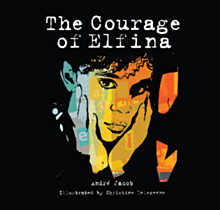
The Courage of Elfina by André Jacob


http://www.lorimer.ca/childrens/Book/3084/The-Courage-of-Elfina.htmlThe Courage of Elfina is the captivating story of a teen who finds herself in a very adult situation. Elfina lives in the country on the banks of the Paraguay River. Her mother died in child birth, while her father is often away working on a large farm in neighbouring Brazil. Elfina attends the local school and lives with her grandmother. When Elfina turns twelve, her grandmother tells her that she will be going to the capital to live with the family of her father’s sister, Evoala. Her wealthy aunt has promised to enrol Elfina in a good school. But big surprises lie ahead. The family is not staying in Asunción, but moving to Montreal to operate a clothing import business. Aunt Evoala also changes Elfina’s name to Elfina Silva Rodriguez so that she will be like their daughter. But Elfina is never sent to school, nor is she treated like their daughter. Instead, she becomes their live-in maid and works around the clock, cooking and cleaning for the family of five. One day, fed up with the exhausting work and frightening home life, Elfina makes a run for it and succeeds in turning her life around.


The Courage of Elfina is a graphic novel intended for young adults aged twelve to eighteen who are interested in social issues. The thin, sixty-four-page graphic novel also comes with information and statistics on forced child labour and a list of resources and websites for further reading. The book is intended “for reluctant readers,” which is also the tagline of the publisher.

The author, illustrator, and translator of this story make up a stellar cast. Author André Jacob is a former UQAM professor and a guest lecturer on immigration, racism, and international development. Christine Delezenne is an award-winning children’s book illustrator, and Susan Ouriou is also an award-winning literary translator of more than forty works. However, it is the illustration work by Christine Delezenne that really takes the reader on Elfina’s journey. Delezenne skillfully uses a variety of panels to tell Elfina’s story and show the confines of her real and imaginary worlds in the daily toil of her life as a maid.

It is a shame that the illustrator, known for her drawings and their texture, used only high-contrast black and white illustrations with pale blue halftones for colour. From the huge mango tree in the Paraguayan countryside, to the city of Asunción and the red-brick turrets of the family’s Montreal home, this story begs for colour. A broader palette would have also given the reader some greater contrast between Elfina’s life in Paraguay and her experience in Montreal. Some additional hues could have been used to evoke the teen’s psychological state, like her brief moments of happiness in the grocery store when she sees the fruit and vegetable displays that remind her of home.

Elfina is a compelling character that young people should readily identify with. She is ambitious, and when her personal boundaries are crossed, she pushes back and rebels. However, even though this story was intended for reluctant readers, the text itself offers very few opportunities for the reader to truly enter Elfina’s experience, as in this sentence: “On the bus taking me to the capital, I felt lost and sad”; or “I let myself fall under the spell of my old fantasies.” Although the story is written in the first person, the reader knows little of the sounds, scents, textures, and tastes of Elfina’s world, which could have easily been done using simple language. In the end, the text feels more like an outline than a novel.

The Courage of Elfina is an engaging tale to teach young readers about forced child labour right here in Canada. However, this story could have a much greater impact if it were fleshed out and if a wider variety of colours were used in the illustrations. The story itself was gripping, and I hope that one day it will become a full-length novel or graphic novel.

 
The Courage of Elfina

André Jacob

Translated by Susan Ouriou

Illustrated by Christine Delezenne

James Lorimer and Company Ltd.

$24.95, cloth, 64pp

9781459414198

This review has been cross-posted on the Montreal Review of Books website (mRb).


Read more »
0 com

Chicken Rising by Dawn Boyd

Just a little note from me. I think anyone that pens a book this good on their first attempt deserves a pat on the back.


Creating a graphic memoir of your childhood is a daunting task, particularly if it was not picture perfect. In Chicken Rising, D. Boyd pens a series of vignettes that make up the early life of Dawn, D. Boyd’s younger self, in Saint John, New Brunswick in the 1970s. According to an interview with her publisher, the comic artist initially found the process of “reliving the past and bringing her parents back to life” an enjoyable experience. But Boyd was later alarmed by how many private details she’d divulged and felt guilty about how harshly she’d portrayed her mother, whom she wanted to show as “a complicated person, not a villain.” A self-described introvert, the comic artist said that, in the end, the process made her feel vulnerable and exposed, and gave rise to moments of panic.

When viewed through today’s lens, parenting in the 1970s requires some explanation. While more amusing seventies references like flower power, free love, and Woodstock lore abound, parenting at that time rarely reflected this kind of open-mindedness. Dawn’s parents, a war-vet who operates a fried chicken restaurant and a stay-at-home mom, are older and believe in “spare the rod, spoil the child.” Their wooden spoon, the instrument of choice for giving a lickin’, makes two appearances in the first fifty pages. Boyd also shows us the unglamorous yet highly realistic details of that decade, such as short, frizzy perms, beanbag ashtrays, the ubiquitous cigarette, and the late-night movie, which is one of the rare activities that Dawn and her mother enjoy together. The author also skillfully inserts many pop culture references that give the story an extra 1970s layer, which successfully reels the reader further into the story. Although not always an uplifting memoir, there is still a good dose of dark humour.


 Dawn is a sensitive child who is attracted to the arts. Yet, whenever she expresses her desire to be any type of artist, her mother is quick to discourage her, telling her that she’ll have a hard life. Dawn’s mother Sybil is very critical of her daughter, believing that she is preparing her for life ahead. Sybil scolds Dawn for getting ninety-nine percent on a test and making that one error. Her mother is also quick to take the teacher’s side of a school incident without giving Dawn a chance to explain.

Like many parents of her generation, Sybil sees listening to her child’s feelings and validating them as an indulgence, and an overindulged child is a spoiled child. After a boy punches Dawn in the stomach at school, Dawn reports to her parents that everyone at school is mean. Instead of asking her daughter to elaborate, Sybil responds, “You should be grateful to get an education.” Exasperated, Dawn explains that she was punched, to which her father responds, “Nobody ever got anywhere from being a crybaby.” This is indeed tough love, and life at school and in public is also pretty rough and tumble. But in the end, Dawn finds her people.

Although Chicken Rising makes for some sad reading at times, this debut graphic memoir is one of the most realistic graphic representations of the 1970s I’ve seen in a long time. Boyd also demonstrates that she has a keen ear for dialogue, using many sayings popular among adults in that decade. My parents had some of the same refrains and used the same curse words as Dawn’s parents. There were only a few instances of “Jeezly,” obviously a Maritime expression, which sounded foreign to my central Canadian ear.

At times, I found it hard to believe that this is Boyd’s first book. She already draws like a pro, adding plenty of detail to each frame and changing up the panel layout on every page, which plays with the story’s dynamic. I look forward to seeing more work by this comic artist.


Chicken Rising
D. Boyd
Conundrum Press
$18.00, paper, 152pp
9781772620344


This review was cross-posted at the Montreal Review of Books (mRb).

Read more »
0 com

Woman World by Aminder Dhaliwal


Aminder Dhaliwal’s web comic Woman World has made her an Instagram sensation. The comic artist has over 148,000 followers, with her biweekly serialized comic strip garnering an average of 25,000 likes. In this collection of both previously published and new Woman World comics, Dhaliwal serves up slice-of-life anecdotes of a village of women many years after the male species has died out and the planet has been ravaged by a series of natural disasters. Although this post-apocalyptic theme may come across as dark, most of the strips are light and hilarious, addressing issues such as identity, solitude, love, and anxiety, with some occasional angst about the survival of the species.

Woman World was reportedly in part inspired by the LA Women’s March in 2017, an empowering day for Aminder Dhaliwal, when the comic artist met many wonderful people. Dhaliwal apparently started to imagine what the world might be like if it were only inhabited by women. Her collection features a recurring cast of characters, with a handful catching a large part of the limelight. Grandma Ulaana is the only one who remembers the world when there were men, and Emiko is a young girl who believes that men look like Kevin James after she finds a DVD of the Paul Blart: Mall Cop movie. There is also Yumi the blacksmith, Lara the carpenter, Uma the record keeper, Ina the artist, and Doctor.

The village in this all-female society is led by Mayor Gaia, who leads naked, not as a statement, but so she can feel the cool breeze on her underboob. As all great societies keep records, the Mayor gives the order to start an archive, but first the village needs an official name. Mayor Gaia already has a name in mind, but then, so does everyone else. Lady Land, Female Federation, Dame District, Matriarch Macrocosm, Queens Quay, and Gal Globe are other names that are thrown into the ring. But the Mayor prevails and the village is called Woman World, and their first major project is to build a hospital.

Dhaliwal draws her characters in dramatic poses, and their facial expressions convey a wide range of
emotions. There is a spirited line to her black and white drawings with grey shading, but there are bursts of warm colour every few pages. Although I did not find all the strips equally entertaining, Dhaliwal strikes a nice balance between the funny and the thoughtful, and the comic artist has a genuine talent for timing. What I liked the most about the collection was that it served up a world that accurately reflects how women interact in everyday life that is at odds with our mass media offerings.

My favourite strips involve the discovery of strange objects in the ruins that litter the countryside. In one instance, a little girl finds a pair of stilettos and decides that they are a type of construction boot made to create tiny holes. In another, on a medical supply run, Doctor discovers a male android manufacturing plant, but the plant only got as far as making the mechanical male genitalia. Grandma Ulaana has to explain to Doctor that what she really discovered was a dildo factory.

Aminder Dhaliwal is recent newcomer to the comic world, but we will definitely be hearing much more about this native of Brampton, Ontario. Woman World has already been nominated for the 2018 Ignatz Award for Outstanding Online Comic. An animation graduate of Sheridan College, Aminder Dhaliwal has worked on several animated television series, including Sanjay and Craig, and is currently a director at Disney Television Animation.


Woman World
Aminder Dhaliwal
Drawn & Quarterly
$29.95, paper, 256pp
9781770463356


This review has been cross-posted at the Montreal Review of Books (mRb).

Read more »
0 com

Almost Summer 3 by Sophie Bédard


The third volume of Almost Summer follows the ups and downs of a gang of teens who are about to graduate from high school. With CEGEP just around the corner, the stakes are high. Emily’s mother wants her to study science, while her sidekick Michelle fails math, but shrugs it off. It doesn’t matter because she’s going to study early childhood education anyway. Anthony thinks he’ll study social science to keep his options open, while Max hasn’t got a clue. He refuses to put on a mortarboard for his graduation photo because it would involve removing his beanie and who knows what lies below! This year, Max is more interested in Noémie who’s creating a wall-sized mandala and waffling over studying art.

The release of this third volume of Almost Summer follows on the heels of volumes 1 and 2 published in 2017. The Almost Summer series is the work of comic artist Sophie Bédard, who at the age of 19 did the unimaginable. Just a year after graduating from CEGEP, she published not one but two volumes of the very popular Glorieux printemps [Almost Summer].

I asked Bédard why the change in seasons in the English translation. She said, “I didn’t like the ring of Glorious Spring in English. I liked Almost Summer because it evoked waiting, and during our teens, we sometimes have the impression that our life is on hold. Nothing moves very fast. We have plenty of interests and aspirations, but we’re hemmed in by the fact that we’re still just kids.”
The first two volumes of the French-language series went on to be nominated for a Bédélys and a Bédéis Causa award, two prominent prizes for Quebec comic artists.

The series is set where Bédard grew up in La Prairie on Montreal’s South Shore. In fact, Emily, Michelle, Anthony and Max all go to the same high school as the author attended, La Magdeleine. Don’t be surprised when you pick up a copy and recognize places like the Dix30 on the pages of volume 3. As for the inspiration for her characters, Bédard said that they are composites of herself and some people she went to high school with. In the author’s words, “They’re a happy blend of both.” But if she had to pick the character who most resembled her as a teen, it would be Emily in her everyday life. However, Bédard becomes Michelle when she goes out with friends and has a few drinks.

In the Almost Summer series, the two main characters couldn’t be more different. Emily is a serious student with a strict mother, “No phone calls after 7:30 pm,” while Michelle (aka Mimi) is impulsive, melodramatic and silly, just like your average teen! Michelle has a series of crushes, but decides she’s met her “soulmate” when she sees him playing soccer, and it’s his calves she finds most attractive. Emily has a secret crush that she entrusts only to her diary, which Michelle has no qualms about reading and shamelessly reporting to anyone willing to listen. Nevertheless, the characters of Emily and Michelle complement each other. Emily needs Michelle to bring some fun into her life, while Michelle needs Emily to keep her in line and do some studying. Anthony lives with his grandmother, and he actively pursues Emily, regardless of how many times she bluntly rebuffs him. He’s been friend-zoned. They both work part-time at the same flower shop, which adds further hilarious annoyances for Emily. Then there’s Max who has a wandering eye. He can’t decide which girl he likes. It all depends on which girl he sees first.

Unlike volumes 1 and 2, some seriousness and maturity creep into the characters in Volume 3. Anthony asks Emily to go for a walk with him to visit his mother’s grave, while Max finally removes his beanie and buys some much-needed shampoo. Emily begins to think for herself and about her future rather than just obeying her mother, and Michelle finally has a chance with her “soulmate.” The dialogue is perhaps the best feature of the Almost Summer series, and volume 3 in particular. It’s funny and accurately depicts how teens talk to each other, with Emily and Michelle delivering the best quips. The teen reader will find the characters’ situations and reactions both realistic and entertaining.

Although there is little for the gang to do in their suburb, there is still plenty of action, and the story moves forward at a brisk pace. Bédard’s drawings are compelling and have a strong clean line throughout. What is more, one cannot help noticing that the characters’ expressions, especially Michelle’s, have a strong manga feel.

I asked Bédard about her influences in terms of story and drawing styles. She said that she was inspired by manga authors Ai Yazawa, Kyoko Okazaki and Kiriko Nananan, particularly in terms of their pacing, and their focus on the feelings and silent moments of their characters.

Bédard’s interest in making comics intensified when she was studying Graphic Arts at the CEGEP du Vieux Montréal. As a teen, she’d had a webcomic about her everyday life, her friends and school. “I published comics on a blog so that my friends could see them and comment on them,” said Bédard. Incidentally, the author has also twice been nominated for the Joe Shuster Award “Best Webcomic Creator.”

It was through her webcomic that she came across work of other Quebec comic artists. Then, while at CEGEP, when she was just 17, Bédard signed up for a comics workshop given by two well-known Quebec bédéists, Jimmy Beaulieu and David Turgeon. As part of the workshop collective, Bédard published a few strips and then concentrated on longer stories. Once CEGEP was over, in addition to working as an illustrator, she began work on what would become Almost Summer, which was picked up by Pow Pow before Bédard had even finished inking it.

Although a date has yet to be set for the release of the final volume of Almost Summer, Bédard explained the story focuses on Emily’s and Anthony’s family issues, growing up in less than perfect circumstances and learning how to stand up to their parents. Bédard said that it was important for Anthony to remain in Emily’s friend zone. The author believes that friendship between young men and women should be celebrated. Since it is also the final volume, the gang bids adieu to high school and expands their horizons to Montreal, where a number of scenes unfold.

Sophie Bédard has recently finished a university degree in sexology. She hopes one day to be able to combine comics and her field of study. How she will do this still remains a question. The comic artist is currently working on her fifth book, a graphic novel about young adult women, which will also be published by Pow Pow. Ideally, she hopes to complete this book some time in the fall. Until then, all her other projects are on hold. Finally, it would not be overstepping to say that Bédard has had quite a successful run. Now bear in mind that she has yet to celebrate her 27th birthday.

Almost Summer 3
Sophie Bédard
Translated by Helge Dascher and Robin Lang
Pow Pow Press
$22.95
paper
150pp
9782924049419


This feature is cross-posted at the Montreal Review of Books (mRb).

Read more »
1 com

Review of a History of Quebec Comics


BDQ: Essays and Interviews on Quebec Comics
Conundrum Press
Edited by Andy Brown
As editor Andy Brown sets out in the foreword of this collection, BDQ refers to Quebec comics or bande dessinée québécoise, just as manga refers to comics from Japan. Unsurprisingly Quebec is unique in terms of its comics culture, which draws heavily on the Franco-Belgian tradition due to the shared language and is also strongly influenced by North American trends, in particular the US underground comix movement of the 1960s and zines in the 1990s. Brown, also the publisher at Conundrum, acknowledges that the collection is only “a smattering” of what is available on Quebec comics. But obviously the featured artists, images and essays, in his view, reflect important moments in BDQ history. The collection is divided into four time periods with the longest section devoted to The Nineties, evidently an ebullient period for sequential art, particularly in Montreal.

“The Early Years” focuses on Quebec comics that were published in newspapers with little or no text. The strips published between 1904 and 1909 were intended for adults and mirrored the social concerns of the day, such as urbanization, the woes of the working poor and the arrival of new Canadians. There is a particularly interesting essay on the style, technique and influences of Albert Chartier in his well-known strip Onésime.

“The Middle Years” takes us to the 1980s and introduces us to artists who include Réal Godbout, the creator of Red Ketchup, and Jimmy Beaulieu, a principled creator who refuses to turn his back on Quebec comics. One of the most interesting pieces in this section is a never before published letter from Julie Delporte to Sylvie Rancourt about the feminist significance of Rancourt’s Mélody and the sensitive intelligence of her work.

The party really gets started in “The Nineties,” and the two reigning stars of this section are underground superhero Henriette Valium and internationally acclaimed comic artist Julie Doucet. But the BDQ community apparently had its cultural clashes. In response to an article penned by Marc Tessier, “The Montreal Comix Scene,” published in a 2005 special edition of The Comics Journal, a group of people took issue with Tessier’s portrayal and let him know, point by point, in Letters to the Editor of The Comics Journal #274 (February 2006). In a previously unpublished essay on Fish Piss, Andy Brown refers to the zine that ran from 1996 to 2006 as truly bilingual. Its comics, essays, poems and stories were published in French and English without translation since its audience was as bilingual as its editor, Louis Rastelli.

The final section, “Modern Times,” introduces comic artists who have had some recent commercial success. It features interviews with the late Geneviève Castrée, Michel Rabagliati, Zviane, and Diane Obomsawin, in addition to essays on the creator of Mile End, Michel Hellman, and the collaborative work of Zviane and Iris in L’hostie d’chat.

This collection is a great primer for anyone interested in graphic novels or sequential art from Quebec. Among the essays, I preferred those that touched on the artist’s approach to stories and their work methods. Editor Brown also did a commendable job of focusing on comics created by women when the BDQ scene has long been dominated by men.

Personally, I found the interview with Henriette Valium unreadable, but I’m nevertheless interested in seeing more work by this apparent iconoclast. Another unsatisfying read was the Roundtable on 1990s Quebec Comics. Although some interesting points were made, the number of participants made it hard to follow. My final criticism was the collection’s very small print.

As the publisher at Conundrum, Brown has a vested interest in the success of BDQ, but it’s also apparent from this collection that he has made an almost selfless commitment to the vibrancy of this community. Conundrum has translated many high-profile Quebec bédéistes, including Michel Rabagliati and his seminal work The Song of Roland, for the English-speaking world to discover. With support like this, we might soon see comics finally recognized as a true art form in Canada.


The review has been cross-posted at the Montreal Review of Books.
Read more »
0 com

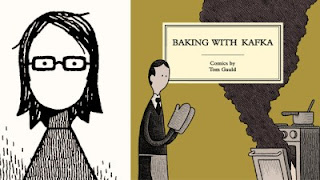
Review: Baking With Kafka by Tom Gauld

https://www.amazon.ca/Baking-Kafka-Tom-Gauld/dp/1770462961/ref=sr_1_1?ie=UTF8&qid=1509805343&sr=8-1&keywords=baking+with+kafkaBaking With Kafka
By Tom Gauld
Drawn & Quarterly
9B781770462960


British cartoonist and illustrator, Tom Gauld is the author of the graphic novels Goliath, Mooncop and You’re All Just Jealous of My Jetpack. Baking with Kafka is his recent collection of short comics, many of which have already been published in The Guardian, New Scientist and The New York Times. Gauld’s drawings are simple, yet perfectly executed, without any superfluous detail. His short strips (1 to 8 panels) are usually funny, but above all, they’re smart and insightful.


The high-brow mention of Kafka in the title might seem ironic to more than a few people, particularly when it’s combined with baking, and the fact that only three strips in the collection relate to the Czech author. The Kafka reference may have to do with Gauld’s reliance on absurdity to get a laugh. Just imagine a comic strip in which two books are lamenting about their adaptations. One book confesses that his book was made into a German TV movie starring David Hasselhoff. Not to be outdone, the other book declares that his adaptation is far worse—the film, the review states, is a masterpiece and surpasses the source material.


The dominant theme throughout Baking with Kafka is books, not just the nerve-racking writing process, or a writer’s doomed attempt at creating something truly original, but also what happens once the book has been written. In one strip, Gauld serves up aptly named authors’ cocktails: the Rejected Manuscript, the Meddling Publisher, the Dreadful Review, and finally, the Disappointing Sales Figures. Gauld also reconstructs classics, adding forgotten chapters to Jane Austen’s Emma and unveiling previously unknown final chapters of Charlie and the Chocolate Factory. There’s also his classic literature with added science: Lady Chatterley’s Lepidopterist, and Sense and Seismology.


Among my favourite strips in this collection are when Gauld combines literary creation with new technology. Consider some of these murder methods for modern mystery writers: run over by a self-driving car, an exploding e-cigarette, strangled with a smartphone charger cable or pushed off a cliff while instagramming. Gauld also delivers a few keyboard shortcuts for novelists that include combinations to find and fill plot holes, remove boring bits, make a protagonist more likeable and add sexual tension. There are also new formats for novels that include a drone book, a holographic information crystal, an odourless glass and a T-shirt.


But Gauld also pokes fun at science, pop culture and the human condition in this collection, bringing to light more than a few uncomfortable truths that will have readers shifting in their seats. In "Revolution!" a rabble-rouser encourages a crowd to smash the system, bring down the government, and march on Parliament demanding change. The crowd, however, wants change but is only willing to sign a petition. "Pass the pen!" Most of us are guilty of signing at least one e-petition on social media for the sake of change. Sadly, there are many more armchair activists than we care to admit.


This collection is one sly, witty, sarcastic comic after another, and the humour is refreshingly British. Brimming with creativity, this book demonstrates how entertaining thinking outside the box can be. The reader might only be cautioned not to read this in public transit, as I did. There are plenty of unexpected laugh-out-loud moments. Minimalist stick men and women may remind us of our elementary school days, but these strips are very much for the thinking adult.


This review has been cross-posted at the Montreal Review of Books.
Read more »